Invasion U.S.A. Full Movie

Manuel Noriega - Wikipedia. Manuel Antonio Noriega Moreno (Spanish pronunciation: [maˈnwel noˈɾjeɣa]; February 1. May 2. 9, 2. 01. 7)[a] was a Panamanian politician and military officer who was the de facto ruler of Panama from 1. He had longstanding ties to United States intelligence agencies, although was removed from power by the U.

The Hollywood Reporter is your source for breaking news about Hollywood and entertainment, including movies, TV, reviews and industry blogs.
S. invasion of Panama. Born in Panama City to a poor mestizo family, Noriega studied at the Chorrillos Military School in Lima and at the School of the Americas. He became an officer in the Panamanian army, and rose through the ranks in alliance with Omar Torrijos. In 1. 96. 8, Torrijos overthrew President Arnulfo Arias in a coup, establishing himself as leader; under Torrijos' government, Noriega became chief of military intelligence.
After Torrijos' death in 1. Noriega consolidated his power to become Panama's de facto ruler in 1. From the 1. 95. 0s until shortly before the U. S. invasion, Noriega worked with U.
S. intelligence agencies. Noriega was one of the Central Intelligence Agency's most valued intelligence sources, as well as one of the primary conduits for illicit weapons, military equipment and cash destined for U. S.- backed counter- insurgency forces throughout Latin America. The U. S. also regarded Noriega as an ally in its War on Drugs, despite Noriega himself having amassed a personal fortune through drug trafficking operations.
Full List of Inventory 1/27/17. You can search for a specific title by using your computer or other device's search function. If you want a specific list (such as. Tomorrow, When The War Began 2 (2012), the sequel to Tomorrow, When The War Began, has been green-lit. Tomorrow, When The War Began director/writer Stuart. The Beatles were an English rock band formed in Liverpool in 1960. With members John Lennon, Paul McCartney, George Harrison and Ringo Starr, they became widely.
Though his U. S. intelligence handlers were aware of this, it was allowed because of his usefulness to the U. S. Noriega relied upon military nationalism to maintain his support, and did not espouse a specific social or economic ideology. In 1. 98. 8, Noriega was indicted by federal grand juries in Miami and Tampa on charges of racketeering, drug smuggling, and money laundering. Following the 1. 98. U. S. invasion of Panama, he was captured and flown to the United States, where he was tried on the Miami indictment. The trial, lasting from September 1.
April 1. 99. 2, ended with Noriega's conviction on most of the charges. He was sentenced to 4. Noriega's U. S. prison sentence ended in September 2. In 2. 01. 0, Noriega was extradited to France, where he was sentenced to seven years of imprisonment for money laundering.
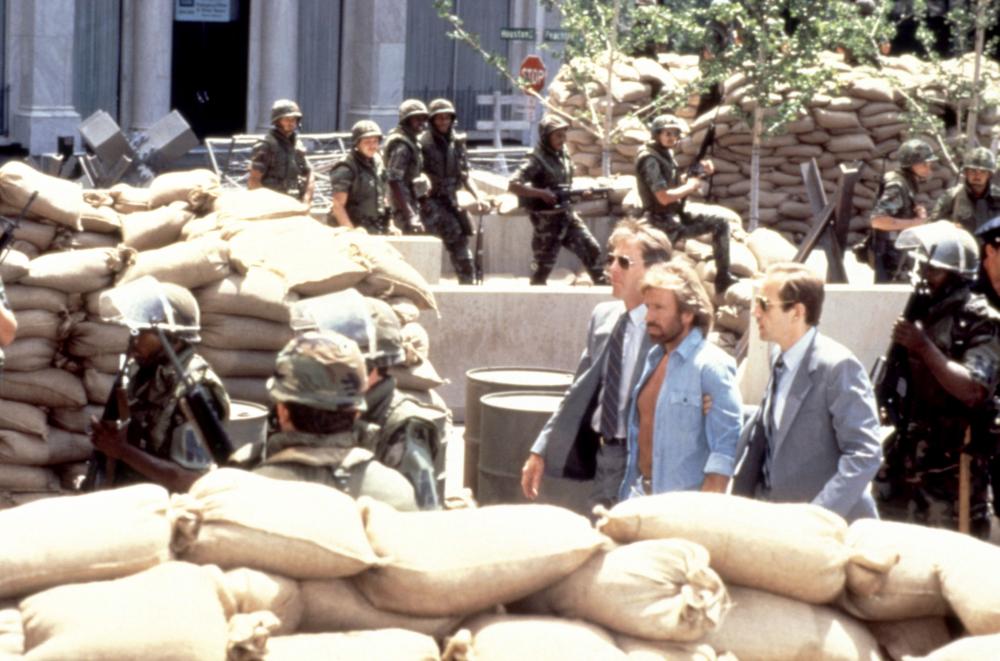
In 2. 01. 1 France extradited him to Panama, where he was sentenced for murder. Diagnosed with a brain tumor in March 2. Noriega suffered complications during surgery, and died two months later.
Generally described as a military dictatorship, Noriega's rule in Panama was marked by repression of the media, an expansion of the military, and the persecution of political opponents, effectively controlling the outcomes of any elections. He was known for his complicated relationship with the U. S., being described as being its ally and nemesis at the same time. He has been called one of the best- known dictators of his time, and compared to authoritarian rulers such as Muammar Gaddafi and Augusto Pinochet.
Early life and family[edit]Noriega was born in Panama City, into a relatively poor mestizo, or mixed- race, family with Native American, African, and Spanish heritage. Noriega's mother has been variously described as a cook or a laundress, while his father, Ricaurte Noriega, was an accountant. Neither had a lengthy presence in his life: his mother died of tuberculosis when he was still a child.
Noriega was brought up by a godmother[2] in a one- room apartment in the slum area of Terraplén. Authors and journalists have suggested that Noriega was in fact the illegitimate son of his father and his father's domestic worker, whose family name was Moreno.
Noriega was educated first at the Escuela República de México, and later at the Instituto Nacional, a well- regarded high school in Panama City that had produced a number of nationalist political leaders. He was described as an "oddly serious child," a bookish student always neatly dressed by his punctilious godmother.
During his time in the Instituto Nacional he met his older brother Luis, a socialist activist and also a student at the school: Manuel had not previously met his siblings. Manuel began living with Luis, who introduced him to politics, including recruiting him into the Socialist Party's youth wing.
During his time in the Socialist youth group, Noriega took part in protests and authored articles criticizing the U. S. presence in Panama. He is reported to have begun his association with the U. S. intelligence services at this time, providing information about the activities of his comrades.[1. He continued to work with the U. S. intelligence services at various points till the 1. U. S. for his activities.[1.
Noriega harbored intentions of becoming a doctor, but was unable to secure a place in the University of Panama's medical school. After graduating from the Instituto Nacional, Noriega won a scholarship to Chorrillos Military School in the Peruvian capital of Lima, with the help of Luis, who had by then received a position in the Panamanian embassy in Peru. While in Peru he made the acquaintance of Roberto Díaz Herrera, who later became a close ally.[1. Noriega married Felicidad Sieiro de Noriega, whom he had met in the 1. Lorena, Sandra and Thays Noriega.[2] Siero had been a school teacher, and Noriega a member of the National Guard.
Her family, of Basque heritage, was reported to have been unhappy with the marriage. Noriega was repeatedly unfaithful to his wife, who at one point expressed a desire for a divorce, though she changed her mind later. National Guard career[edit]Noriega graduated from Chorrillos in 1. He returned to Panama and joined the Panama National Guard.
Posted to Colón, he was given a commission as a second lieutenant in September 1. His commanding officer in Colón was Omar Torrijos, then a Major in the National Guard. Torrijos became a patron and mentor to Noriega, protecting him when he ran into trouble. In a 1. 96. 2 incident, according to journalist John Dinges, Torrijos helped Noriega avoid legal problems after a prostitute accused Noriega of beating and raping her. Soon after, Noriega's drinking and violence obliged Torrijos to confine him to his quarters for a month. Despite Noriega's problems, Torrijos maintained their relationship, ensuring they were always in the same command; he also brought Díaz Herrera into the same unit.
Díaz Herrera and Noriega became both friends and rivals for Torrijos's favor. In 1. 96. 6, Noriega was again involved in a violent incident, allegedly raping a 1. After this Torrijos transferred Noriega to a remote posting.
After several months, Noriega was transferred to the province of Chiriquí, where Torrijos and Díaz Herrera were posted. That year's presidential election was contested by Arnulfo Arias, a native of that province. The sitting President, Rodolfo Chiari, ordered Torrijos to harass Arias's party members, to weaken his election bid.
Torrijos passed this task on to Noriega, whose men arrested a number of people. Several prisoners said that they had been tortured; others stated they had been raped in prison.
The brutality of Noriega's activities led to him being suspended for ten days, an item of information that was picked up by the U. S. intelligence services. The School of the Americas (photographed in 2.
Noriega took several courses. As a second lieutenant in 1.
Noriega spent many months taking courses at the School of the Americas. The school was located at the United States Army's Fort Gulick in the Panama Canal Zone. Dinges has suggested that Torrijos sent Noriega to the school to help him "shape up" and live up to Torrijos's expectations. Despite performing poorly in his classes, he received a promotion in 1.
Torrijos found him a job as an intelligence officer in the "North Zone" of the National Guard. Shortly afterward he returned to the School of the Americas for more training. Over the various periods of time he spent there he participated in courses on infantry operations, counterintelligence, intelligence, and jungle operations.[1.
The Beatles - Wikipedia. The Beatles were an English rock band formed in Liverpool in 1. With members John Lennon, Paul Mc. Cartney, George Harrison and Ringo Starr, they became widely regarded as the foremost and most influential act of the rock era.[1] Rooted in skiffle, beat and 1. Beatles later experimented with several musical styles, ranging from popballads and Indian music to psychedelia and hard rock, often incorporating classical elements and unconventional recording techniques in innovative ways. In 1. 96. 3 their enormous popularity first emerged as "Beatlemania", and as the group's music grew in sophistication in subsequent years, led by primary songwriters Lennon and Mc.
Cartney, they came to be perceived as an embodiment of the ideals shared by the counterculture of the 1. Watch Beetlejuice Online Beetlejuice Full Movie Online on this page. The Beatles built their reputation playing clubs in Liverpool and Hamburg over a three- year period from 1. Watch Red Christmas Online Red Christmas Full Movie Online'>Watch Red Christmas Online Red Christmas Full Movie Online. Stuart Sutcliffe initially serving as bass player.
The core of Lennon, Mc. Cartney and Harrison went through a succession of drummers, including Pete Best, before asking Starr to join them in 1. Manager Brian Epstein moulded them into a professional act, and producer George Martin guided and developed their recordings, greatly expanding their popularity in the United Kingdom after their first hit, "Love Me Do", in late 1. They acquired the nickname "the Fab Four" as Beatlemania grew in Britain the next year, and by early 1. British Invasion" of the United States pop market. From 1. 96. 5 onwards, the Beatles produced increasingly innovative recordings, including the albums Rubber Soul (1.
Revolver (1. 96. 6), Sgt. Pepper's Lonely Hearts Club Band (1. The Beatles (commonly known as the White Album, 1. Abbey Road (1. 96. After their break- up in 1.
Mc. Cartney and Starr, the surviving members, remain musically active. Lennon was shot and killed in December 1. Harrison died of lung cancer in November 2. The Beatles are the best- selling band in history, with estimated sales of over 8. They have had more number- one albums on the British charts and sold more singles in the UK than any other act. They are also the best- selling music artists in the United States, with 1.
In 2. 00. 8, the group topped Billboard magazine's list of the all- time most successful artists; as of 2. Hot 1. 00 chart with twenty. They have received seven Grammy Awards, an Academy Award for Best Original Song Score and fifteen Ivor Novello Awards. The group was inducted into the Rock and Roll Hall of Fame in 1.
They were also collectively included in Time magazine's compilation of the twentieth century's 1. History 1. 95. 7–1.
Formation, Hamburg, and UK popularity. In March 1. 95. 7, John Lennon, then aged sixteen, formed a skiffle group with several friends from Quarry Bank High School. They briefly called themselves the Blackjacks, before changing their name to the Quarrymen after discovering that a respected local group was already using the other name.
Fifteen- year- old Paul Mc. Cartney joined as a rhythm guitarist shortly after he and Lennon met that July.
In February 1. 95. Mc. Cartney invited his friend George Harrison to watch the band. The fifteen- year- old auditioned for Lennon, impressing him with his playing, but Lennon initially thought Harrison was too young to join them. After a month of Harrison's persistence, during a second meeting, arranged by Mc. Cartney, he performed the lead guitar part for the instrumental "Raunchy" on the upper deck of a Liverpool bus,[4] and they enlisted him as their lead guitarist. By January 1. 95.
Lennon's Quarry Bank friends had left the group, and he began studies at the Liverpool College of Art. The three guitarists, billing themselves at least three times as Johnny and the Moondogs, were playing rock and roll whenever they could find a drummer. Lennon's art school friend Stuart Sutcliffe, who had recently sold one of his paintings and was persuaded to purchase a bass guitar, joined in January 1.
Beatals, as a tribute to Buddy Holly and the Crickets.[1. They used the name until May, when they became the Silver Beetles, before undertaking a brief tour of Scotland as the backing group for pop singer and fellow Liverpudlian Johnny Gentle.
By early July, they had changed their name to the Silver Beatles and by the middle of August to the Beatles. Allan Williams, the Beatles' unofficial manager, arranged a residency for them in Hamburg, but lacking a full- time drummer they auditioned and hired Pete Best in mid- August 1. The band, now a five- piece, left four days later, contracted to club owner Bruno Koschmider for what would be a 3½- month residency. Beatles historian Mark Lewisohn writes: "They pulled into Hamburg at dusk on 1. August, the time when the red- light area comes to life .. Koschmider had converted a couple of strip clubs in the district into music venues, and he initially placed the Beatles at the Indra Club. After closing the Indra due to noise complaints, he moved them to the Kaiserkeller in October.
When he learned they had been performing at the rival Top Ten Club in breach of their contract, he gave the band one month's termination notice, and reported the underage Harrison, who had obtained permission to stay in Hamburg by lying to the German authorities about his age. The authorities arranged for Harrison's deportation in late November. One week later, Koschmider had Mc.
Cartney and Best arrested for arson after they set fire to a condom in a concrete corridor; the authorities deported them. Lennon returned to Liverpool in early December, while Sutcliffe remained in Hamburg until late February with his German fiancée Astrid Kirchherr, who took the first semi- professional photos of the Beatles. During the next two years, the Beatles were resident for periods in Hamburg, where they used Preludin both recreationally and to maintain their energy through all- night performances. In 1. 96. 1, during their second Hamburg engagement, Kirchherr cut Sutcliffe's hair in the "exi" (existentialist) style, later adopted by the other Beatles.
When Sutcliffe decided to leave the band early that year and resume his art studies in Germany, Mc. Cartney took up the bass. Producer Bert Kaempfert contracted what was now a four- piece group until June 1. Tony Sheridan's backing band on a series of recordings for Polydor Records.[1. As part of the sessions, the Beatles were signed to Polydor for one year.
Credited to "Tony Sheridan & the Beat Brothers", the single "My Bonnie", recorded in June 1. Musikmarkt chart. After the Beatles completed their second Hamburg residency, they enjoyed increasing popularity in Liverpool with the growing Merseybeat movement. However, they were also growing tired of the monotony of numerous appearances at the same clubs night after night. In November 1. 96. The Cavern Club, they encountered Brian Epstein, a local record- store owner and music columnist.
He later recalled: "I immediately liked what I heard. They were fresh, and they were honest, and they had what I thought was a sort of presence .. Epstein courted the band over the next couple of months, and they appointed him as their manager in January 1. Throughout early and mid- 1. Epstein sought to free the Beatles from their contractual obligations to Bert Kaempfert Productions. He eventually negotiated a one- month- early release from their contract in exchange for one last recording session in Hamburg.
Tragedy greeted them on their return to Germany in April, when a distraught Kirchherr met them at the airport with news of Sutcliffe's death the previous day from what would later be determined to have been a brain hemorrhage. Epstein began negotiations with record labels for a recording contract. In order to secure a UK record contract, Epstein negotiated an early end to the band's contract with Polydor, in exchange for more recordings backing Tony Sheridan. After a New Year's Day audition, Decca Records rejected the band with the comment "Guitar groups are on the way out, Mr.